Building the NAISC Knowledge Graph
NAISC aims to identify many thousands of people who came to Ireland during the era of the Anglo-Norman invasion and colonisation (1169–1272). This page explains how a Knowledge Graph works and how our research team is creating the NAISC dataset.
The conquest of Ireland between 1169 and 1272 brought thousands of people to the island. The NAISC research team is using a ‘Knowledge Graph’ to uncover their stories, trace their relations and map their connections.
The Knowledge Graph already encodes information about key events in the invasion era, as well as over 2,500 named individuals who participated in the conquest from the famous Strongbow (Richard fitz Gilbert de Clare, d. 1176) and his Irish wife Aífe (d. 1189), daughter of Diarmait Mac Murchada (d. 1171).
Thousands more are being added during The Year of the Normans 2027.
You can explore the NAISC Knowledge Graph now through our showcase.
Each individual from the period is assigned a stable and unique digital identifier — which acts like an identity card, which can be cited by future researchers. This identifier is known as a Uniform Resource Identifier (URI).
The research team also adds ‘knowledge’ to each of these entries — for example, data about family relationships, land holdings, occupations, and life dates.
This work forms part of the Knowledge Graph for Irish History, undertaken in collaboration with Trinity College Dublin’s School of Computer Science and Statistics led by Professor Declan O’Sullivan.
How large is the dataset?
Since work began in July 2025, the NAISC team has created identifiers for approximately 2,280 additional people from the from the century following the Anglo-Norman invasion (1169-1272), building on around 260 medieval individuals from the Dictionary of Irish Biography, who already had an entry in the Knowledge Graph for Irish History.
What is an identifier/URI?
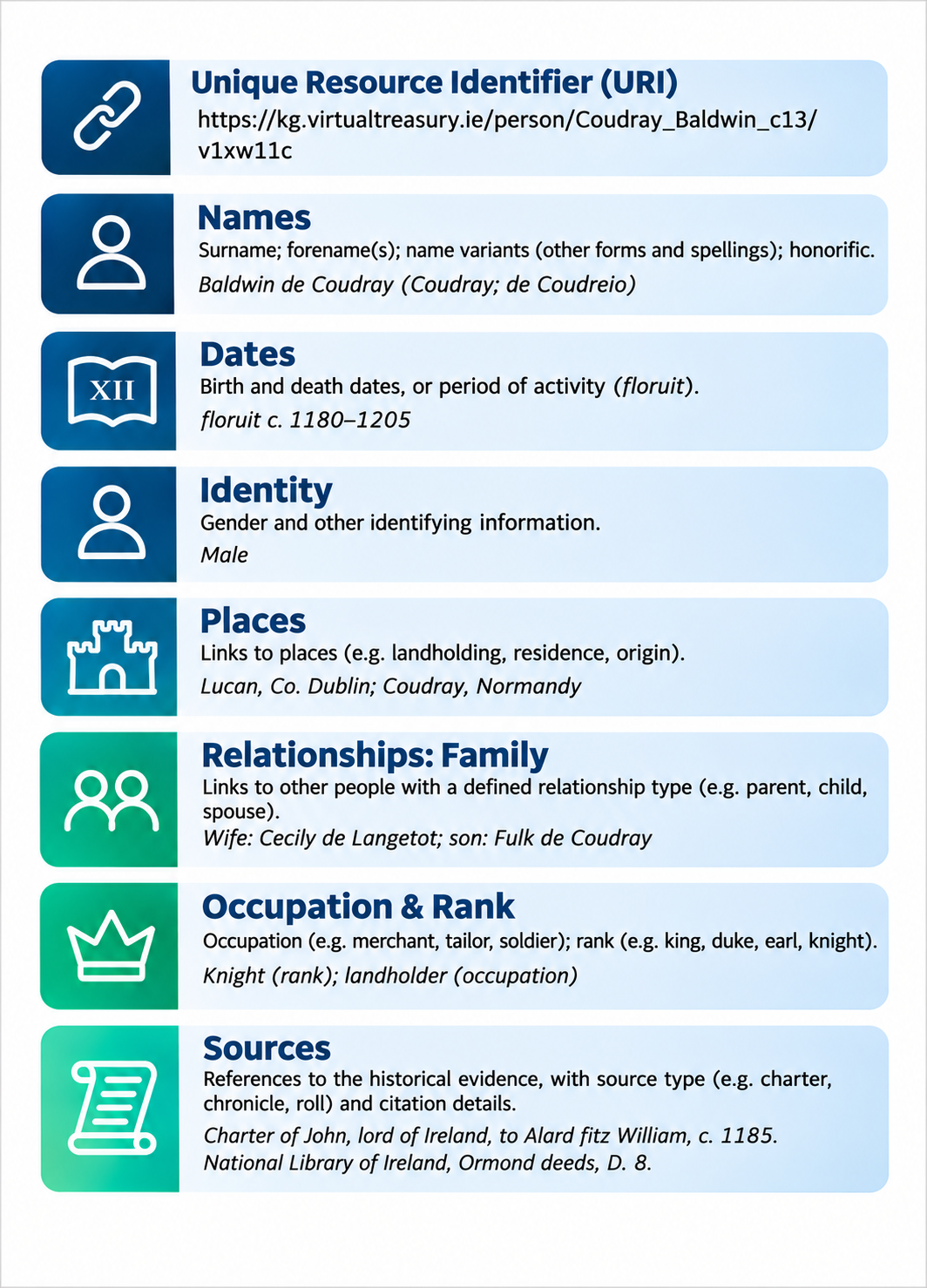
The identifier for an individual is similar to a URL in that it refers to a resource that is accessible through the internet. The URI identifies the individual, and also brings the researcher to any additional knowledge or linked data the research team has associated with them.
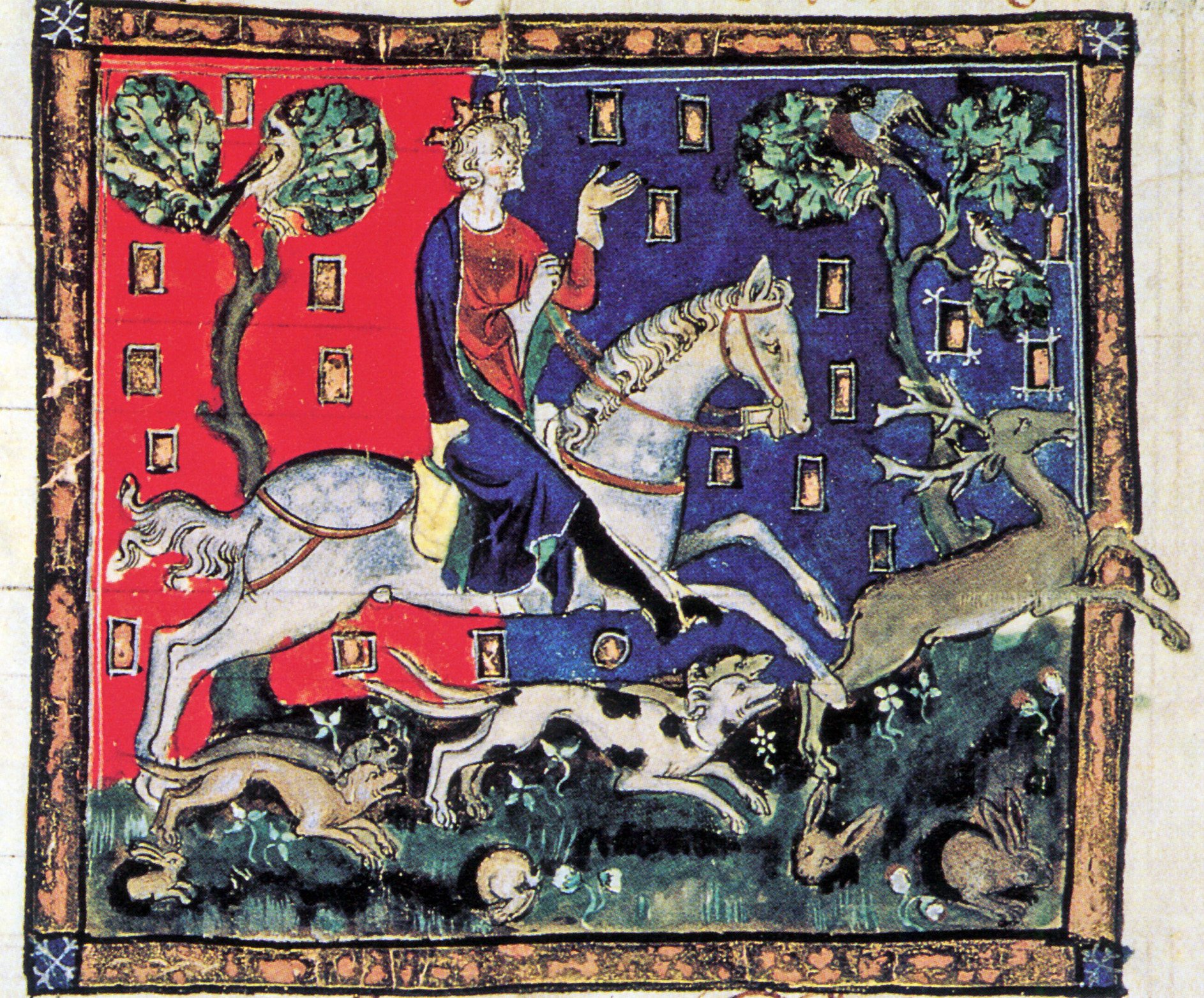
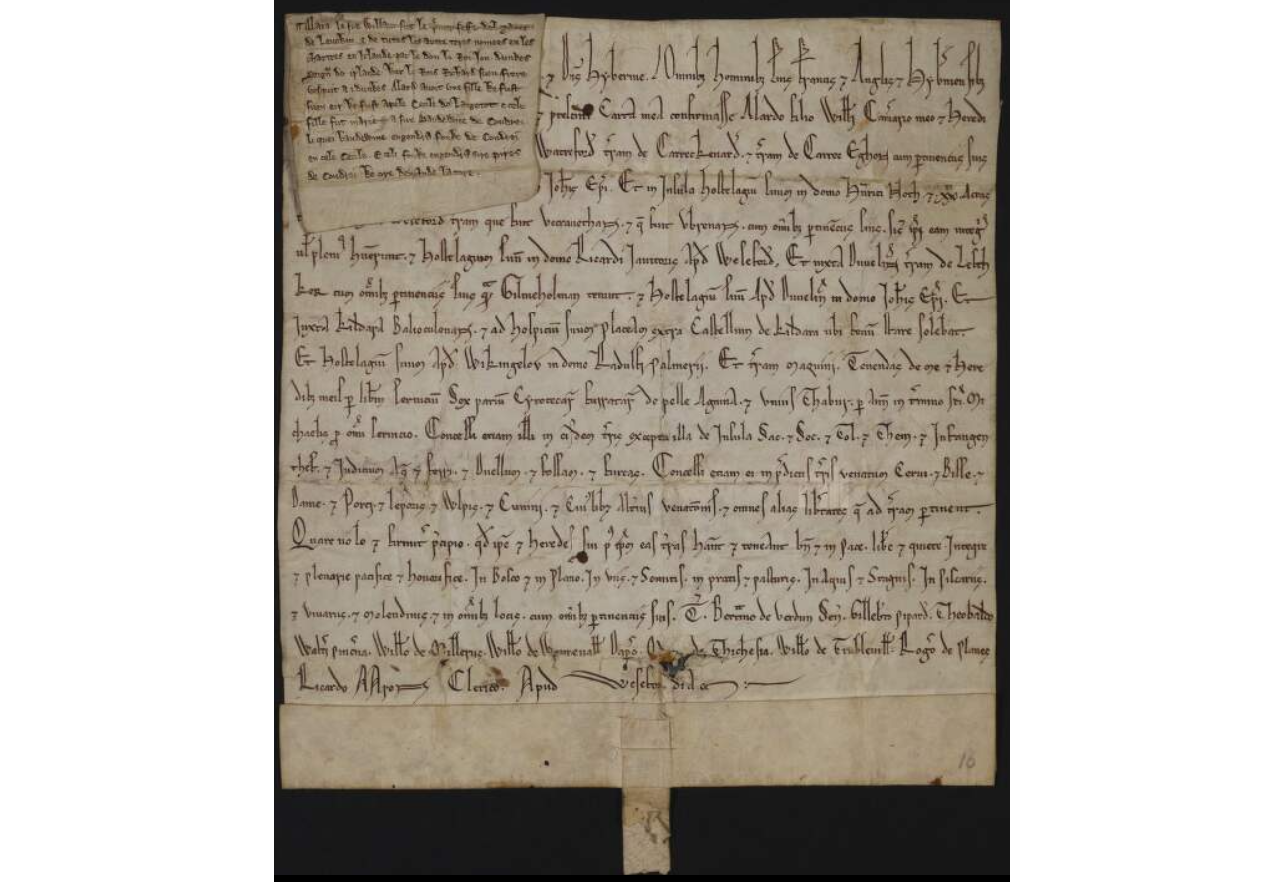
Alard FitzWilliam (d. 1214), who took part in the expedition of 1185 led by Henry II’s son John (future King of England, 1199–1216) has been assigned the following identifier:
https://kg.virtualtreasury.ie/entity-card/person/FitzWilliam_Alard_c13/v16nsr5
This URI contains the following basic information, about Alard, which together makes the string completely unique and interpretable by researchers:
- Person (i.e., what kind of ‘thing’ from the past this describes, a person as distinct from a place, office, organisation or event)
- Surname (in this case, FitzWilliam)
- Forename (in this case, Alard)
- Century (shown as c13, representing 13th century when Alard died)
- Unique code (created automatically to ensure the URI will be permanently unique.
From document to Knowledge Graph: an example
In 1185, John, lord of Ireland (later King John of England, 1199–1216), visited Ireland and issued a series of charters granting lands to his followers.
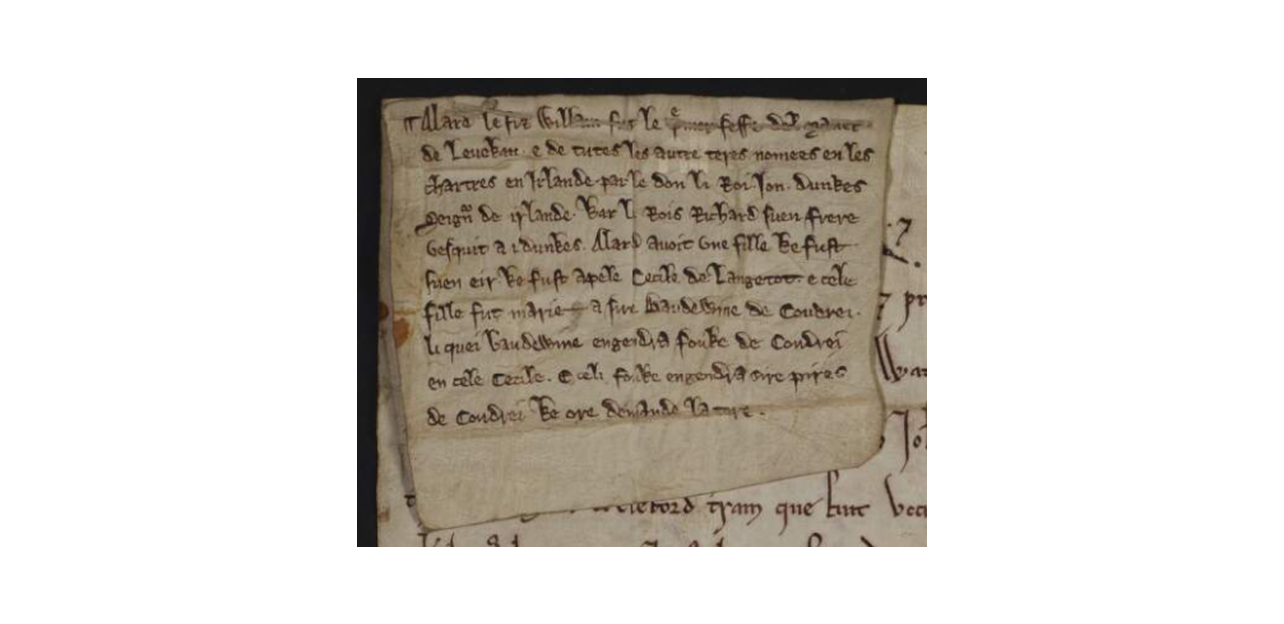
One of these charters, issued at Wexford, granted lands in south-east Ireland to Alard fitz William, John’s chamberlain. The original document survives among the Ormond deeds, now held by the National Library of Ireland. At some point in the late thirteenth century, a note was added to the charter in French. This records how the manor of Lucan, Co. Dublin, passed through Alard’s daughter Cecily and her marriage into the de Coudray family.
From this one document, we can identify five individuals across several generations:
- Alard fitz William: Chamberlain of Lord John and father of Cecily; associated with Esker, Co. Dublin.
- Cecily de Langetot: Daughter of Alard and wife of Baldwin de Coudray; associated with Lucan, Co. Dublin and Lanquetot, midway between Rouen and Le Harve.
- Sir Baldwin de Coudray: Husband of Cecily; associated with Lucan and Le Coudray, dép. Seine-Maritime.
- Sir Fulk de Coudray: Son of Baldwin and Cecily, and father of Piers; associated with Le Coudray, dép. Seine-Maritime.
- Sir Piers de Coudray: Son of Fulk de Coudray; associated with Le Coudray, dép. Seine-Maritime.
The Knowledge Graph records each of these individuals separately, together with their family relationships and associations with particular places. It also links the information to the document from which it was obtained. This example illustrates how a single surviving document can provide evidence for relationships extending across several generations and between Ireland and Normandy.
Connecting people and places
The Knowledge Graph records relationships between individuals, including parents, children and spouses, as well as associations with particular places. We can record, for example, where a person held land or had family connections.
Each entry is linked to the historical sources from which its information has been drawn. This allows users to examine the evidence for an individual’s identity and relationships, and to explore connections between people mentioned in different documents.
Establishing whether names found in different sources refer to the same individual is an important part of this work. Medieval names were frequently repeated within families, while spelling and forms of identification could vary considerably. By comparing names, dates, family relationships and associated places, we can bring together references to the same individual while preserving links to the original evidence.
Events in the conquest and colonisation of Ireland
The NAISC Knowledge Graph also contains records for ten events associated with the Anglo-Norman invasion, grouped under the overarching event Conquest of Ireland, 1169–1272.
Conquest of Ireland, 1169–1272
1166 — Expulsion of Diarmait Mac Murchadha
1169 — Siege and capture of Wexford
1170 — Battle of Baginbun
1170 — Siege and capture of Waterford
1170 — Siege and capture of Dublin
1171–72 — Expedition of Henry II
1175 — Treaty of Windsor
1177 — Conquest of Ulster
1177 — Invasion of Munster
Key sources
The NAISC team has already created person entries from the following sources and collections:
Chronicles of the invasion
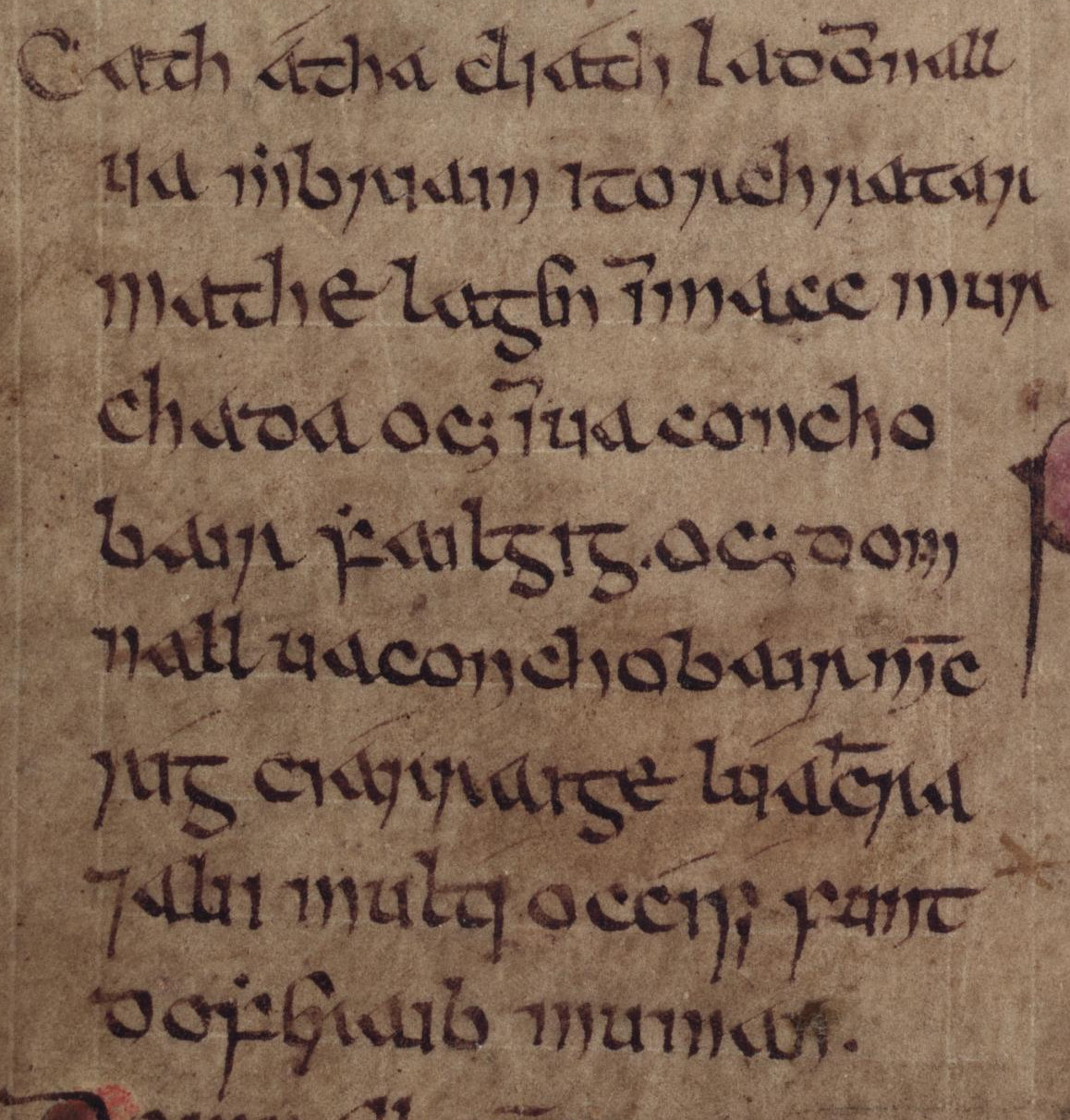
Two important contemporary accounts of the invasion survive: Gerald of Wales’s Expugnatio Hibernica (The Conquest of Ireland) and the French-language Song of Dermot and the Earl, also known as The Deeds of the Normans in Ireland.
Both provide information about the individuals and families involved in the invasion. They were written from the perspective of the conquerors, however, and must be read with that in mind. Even with this in mind, using these sources we were able to create URIs for some 85 people who were at the vanguard of the invasion.
Medieval charters
Charters record grants of land, rights and privileges. They are particularly valuable for identifying people involved in the settlement and colonisation of Ireland. In addition to naming those making and receiving grants, they frequently include lists of witnesses.
We have extracted information about individuals from several major collections:
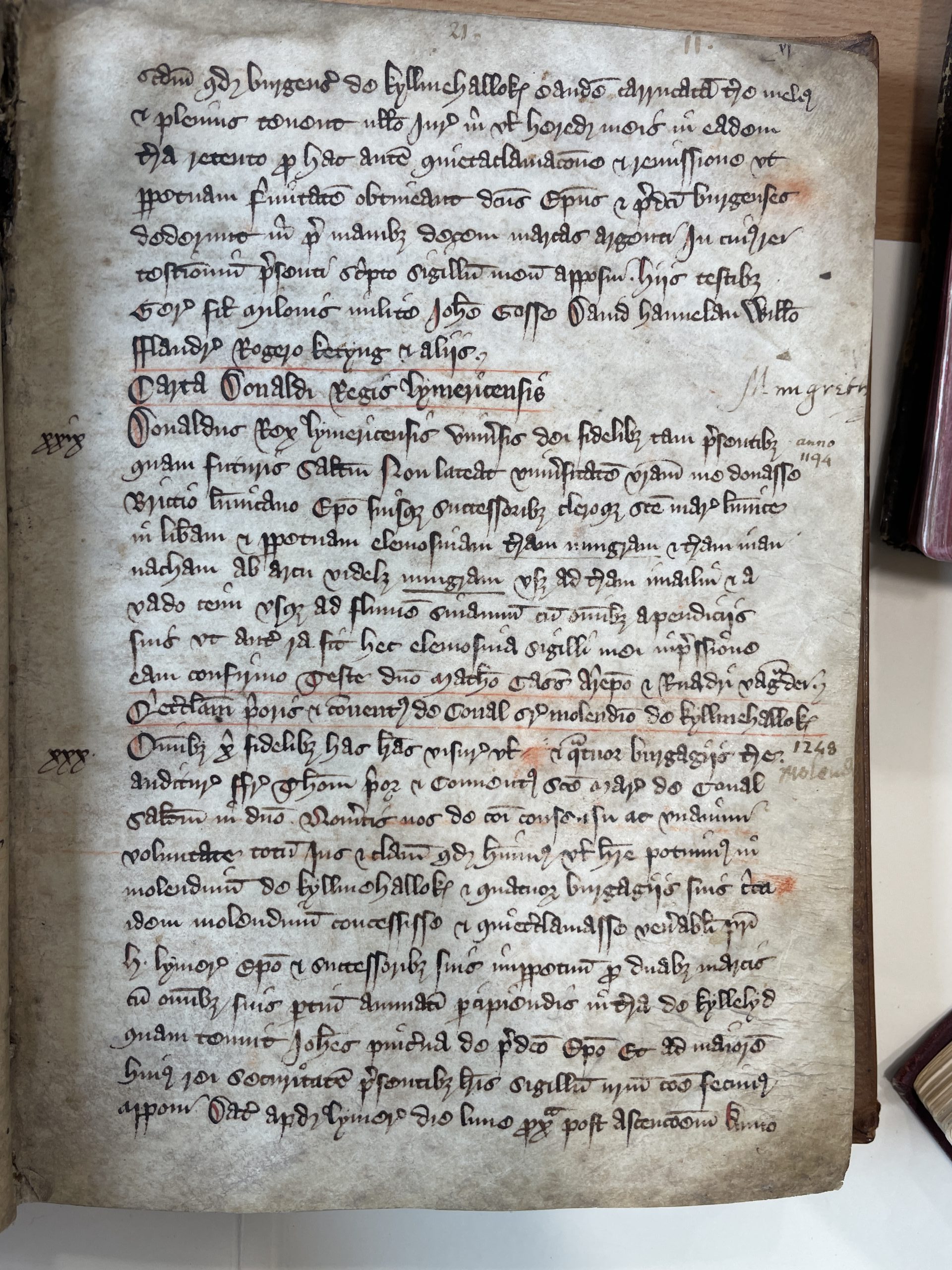
Black Book of Limerick. Preserved in the Limerick Diocesan Archive, this manuscript contains an important collection of charters relating to Limerick from the late twelfth century onwards. Our work has benefited from Brian Hodkinson’s research and access to the original manuscript.
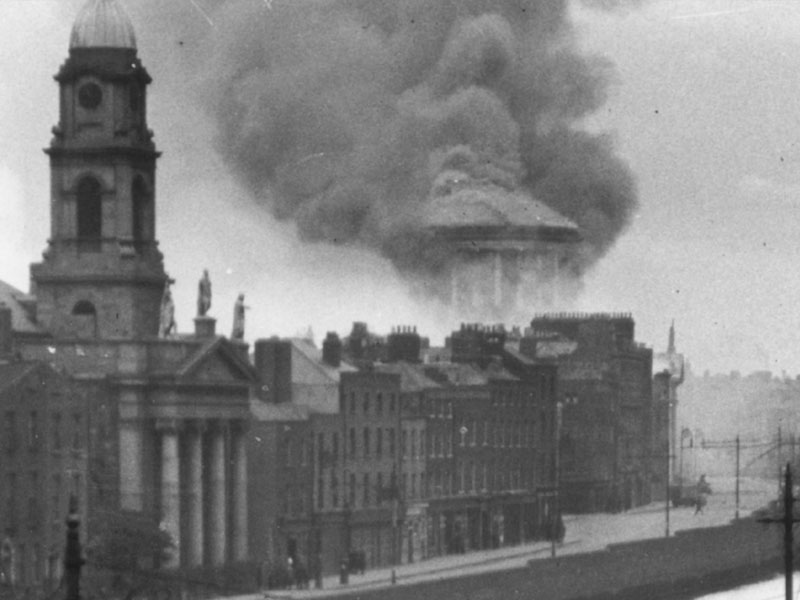
Christ Church deeds. The medieval deeds of Christ Church Cathedral, Dublin, were destroyed in the fire at the Public Record Office of Ireland in 1922. A calendar prepared before their destruction preserves information about the documents and the people named in them.
Gormanston Register. Preserved in the National Library of Ireland, this late-fourteenth-century register contains title deeds relating to the Preston family and their predecessors, including early grants of land in Ireland.
Ormond deeds. Originally preserved at Kilkenny Castle and now held by the National Library of Ireland, the Ormond deeds form one of Ireland’s most important surviving collections of medieval charters. We have used Edmund Curtis’s published calendar to identify people mentioned in the documents.
Partition of Leinster, 1247. The division of the Marshal inheritance among the five daughters of William Marshal and Isabel de Clare produced extensive records of landholding in Leinster. Using Eric St John Brooks’s research and the edition prepared by Dr John Marshall, we have identified individuals named in these records and linked them to their landholdings.
Records of royal government
The English crown produced a substantial body of documentation relating to Ireland, including letters, grants, legal proceedings and records of government business.
We have extracted the names of individuals appearing between 1172 and 1216 in H. S. Sweetman’s Calendar of Documents Relating to Ireland, compiled from records preserved in what is now The National Archives, UK.
What’s next?
Further government records. Having examined the Calendar of Documents Relating to Ireland up to 1216, we intend to extend our coverage to 1272.
Irish annals. Much of the evidence assembled so far comes from records produced by the Anglo-Norman settlers and their descendants. We will broaden this coverage by examining the Irish annals, including those of Ulster, Inisfallen, Connacht and Loch Cé, as well as the later Annals of the Four Masters. These sources provide important evidence for individuals and events in Gaelic Ireland, including responses to the invasion.
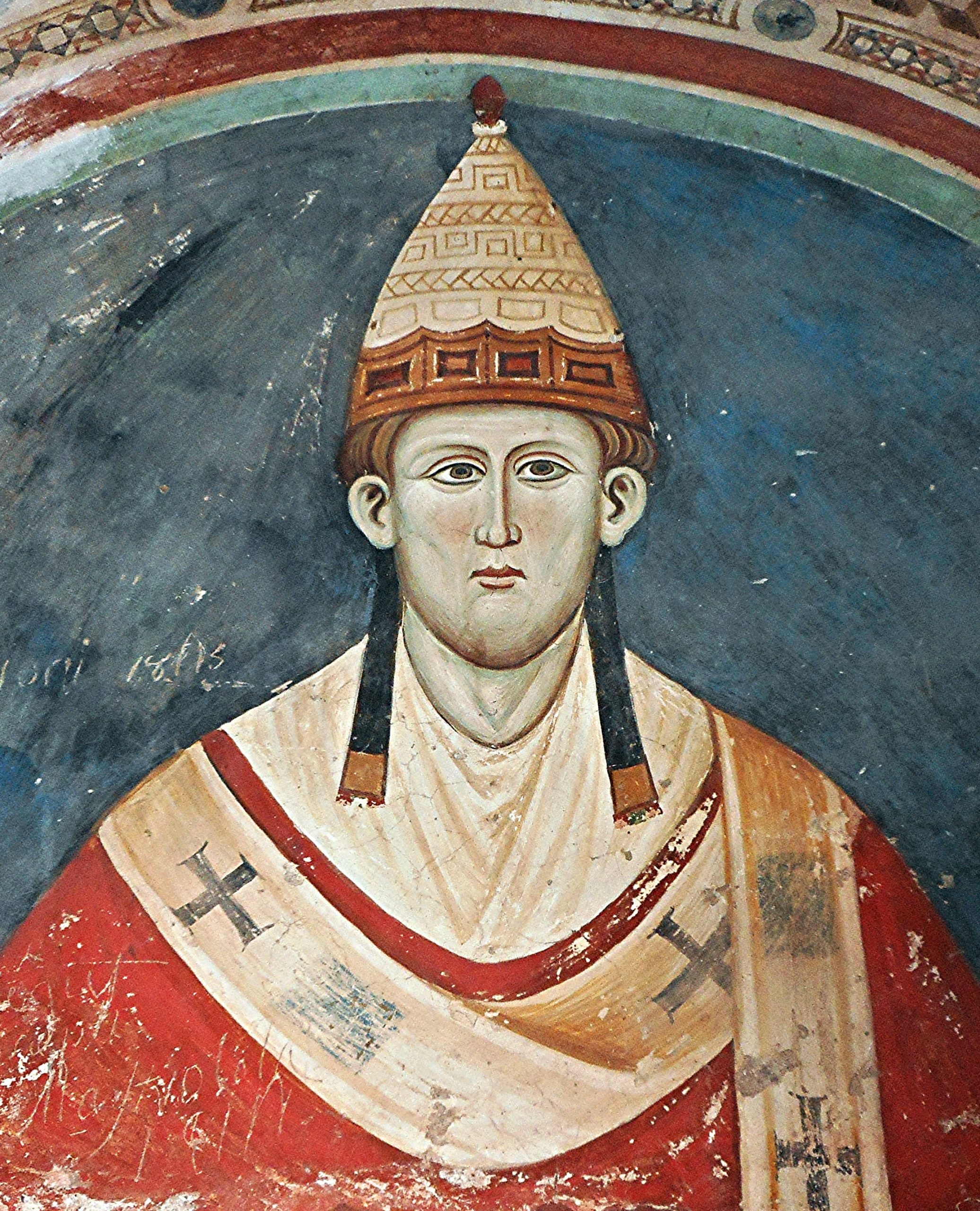
Papal records. The surviving registers of the medieval papacy contain letters and petitions concerning Ireland. These documents provide information about individuals involved in ecclesiastical affairs, disputes and communications with the papal court.
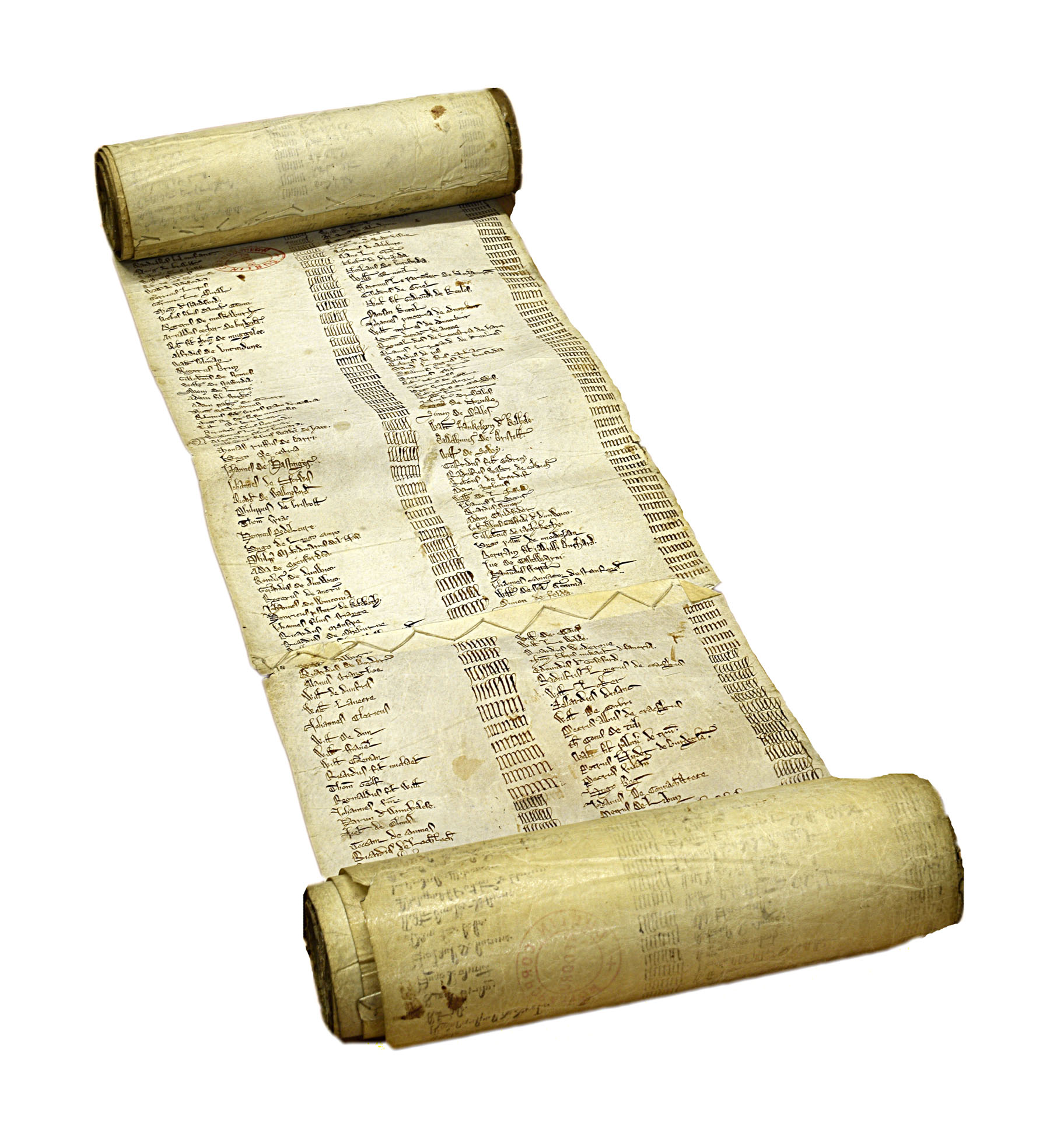
Dublin Guild Merchant Roll. Dating mainly from around 1190 to 1265, this roll contains more than 8,500 entries recording admissions to Dublin’s merchant guild. It preserves names and, in some cases, information about occupations, places of origin and family relationships. The text was edited by Philomena Connolly in 1992.