Key Documents from the Campaign for Emancipation
Mass Politics and the End of the Penal Era
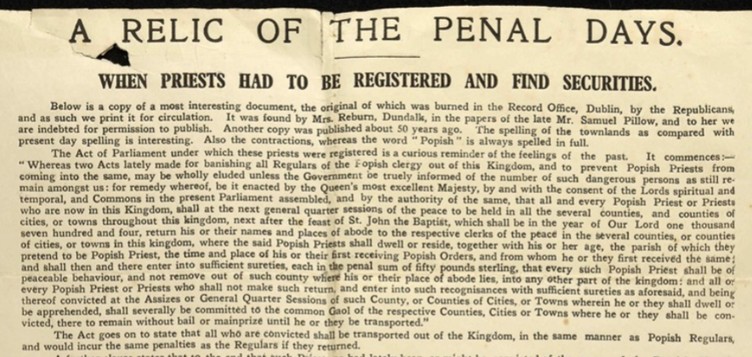
This printed sheet preserves a copy of a 1704 register of Catholic priests compiled under the penal 'Act to Prevent the Further Growth of Popery'. Clergy were required to report their age, parish, ordination, and a Protestant surety, enabling close state surveillance. Such measures restricted Catholic worship, landholding, education, and political rights. Beginning here highlights how Catholics were treated not as citizens but as a suspect population; conditions that shaped Irish society long before Emancipation became a political demand.
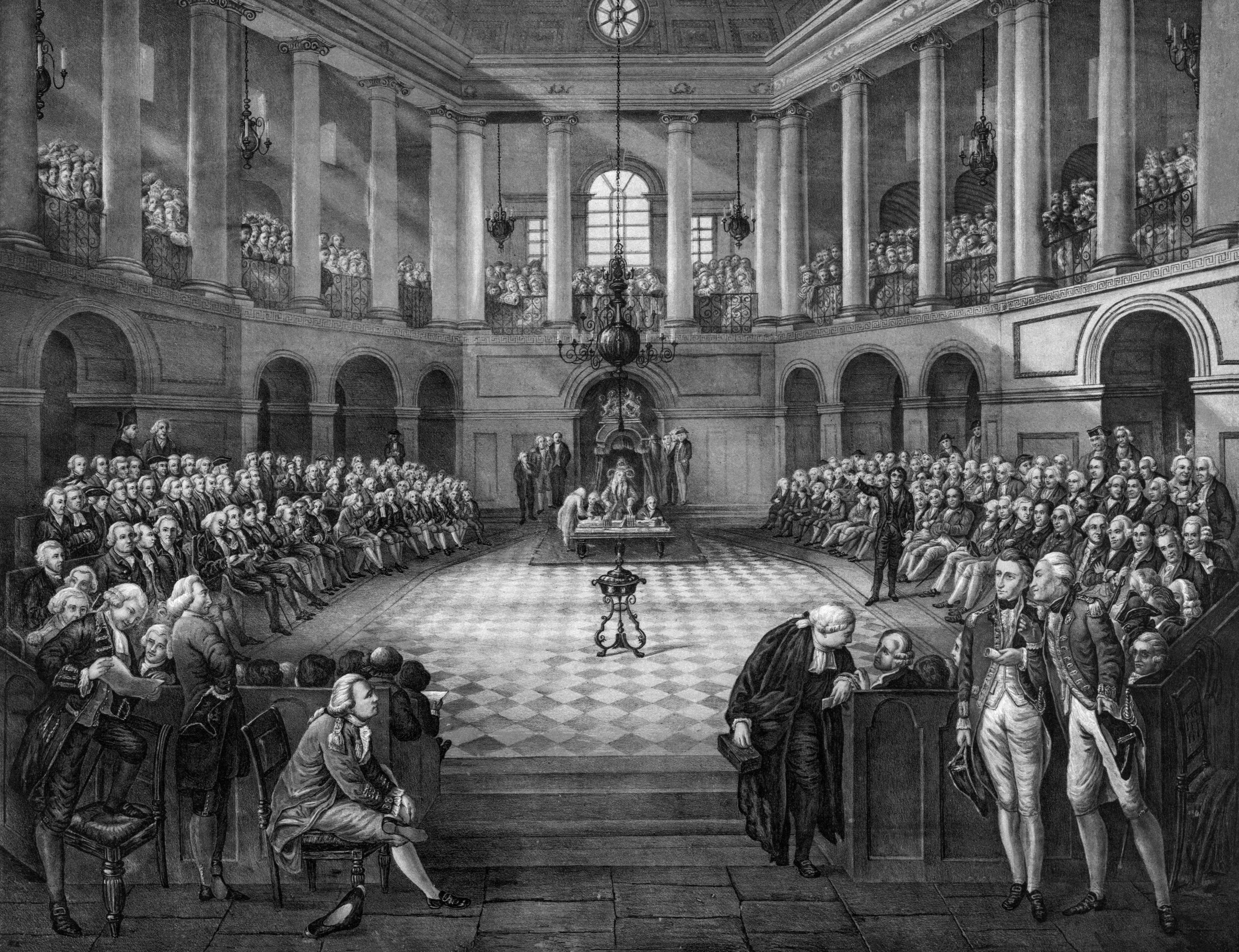
View this itemBy the late eighteenth century, total exclusion looked increasingly impractical. This debate on reforming the penal laws marks the first serious attempt at 'Catholic Relief'. Supporters argued Catholics should be allowed property and loyalty to the state; opponents feared weakening Protestant ascendancy. Influenced by Britain’s war with America and the need for recruits, relief was driven by necessity rather than tolerance. The 'Catholic question' emerged as a permanent feature of Irish parliamentary politics.
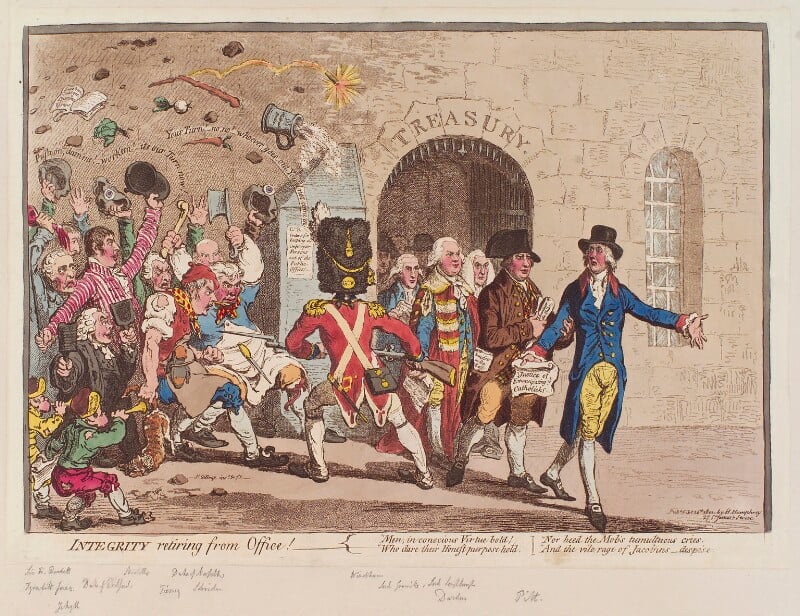
View this itemWritten just after the Act of Union, this letter to one of the Union's architects, Lord Castlereagh, shows hopes of Emancipation faltering. Many Catholics had expected Union to bring full rights, yet reform stalled in the face of royal opposition. The government now faced a dilemma: how long could loyalty be sustained if promises of equality were repeatedly postponed?
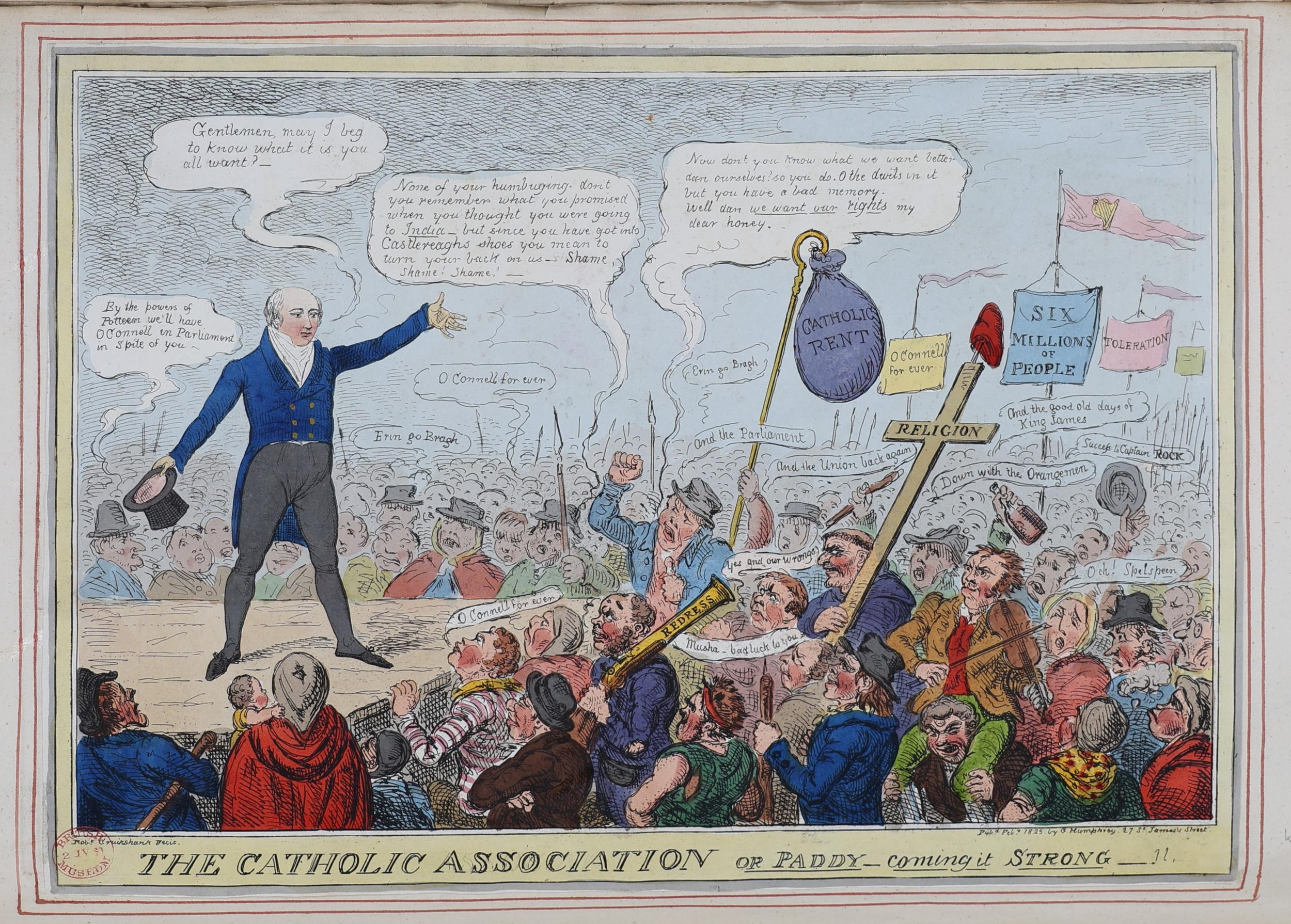
View this itemThe following eye-witness account reveals a new phase in the struggle. During the 1820s, the Catholic Association, led by Daniel O'Connell, organised politics at parish level: collecting subscriptions, spreading information, and coordinating supporters nationwide. It transformed a legal grievance into a mass democratic movement. Instead of secret rebellion, the strategy was open, constitutional pressure. This modern style of mobilisation would soon reshape elections and make Catholic voters impossible to ignore.
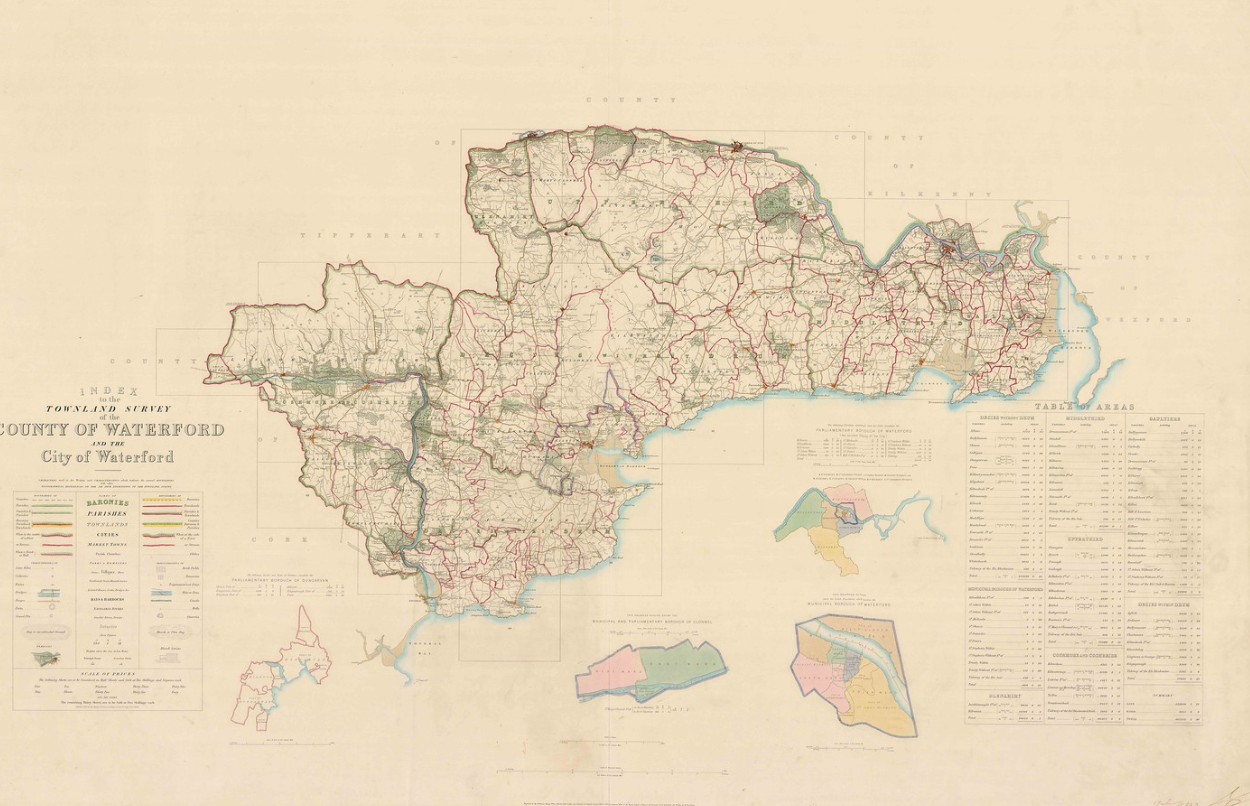
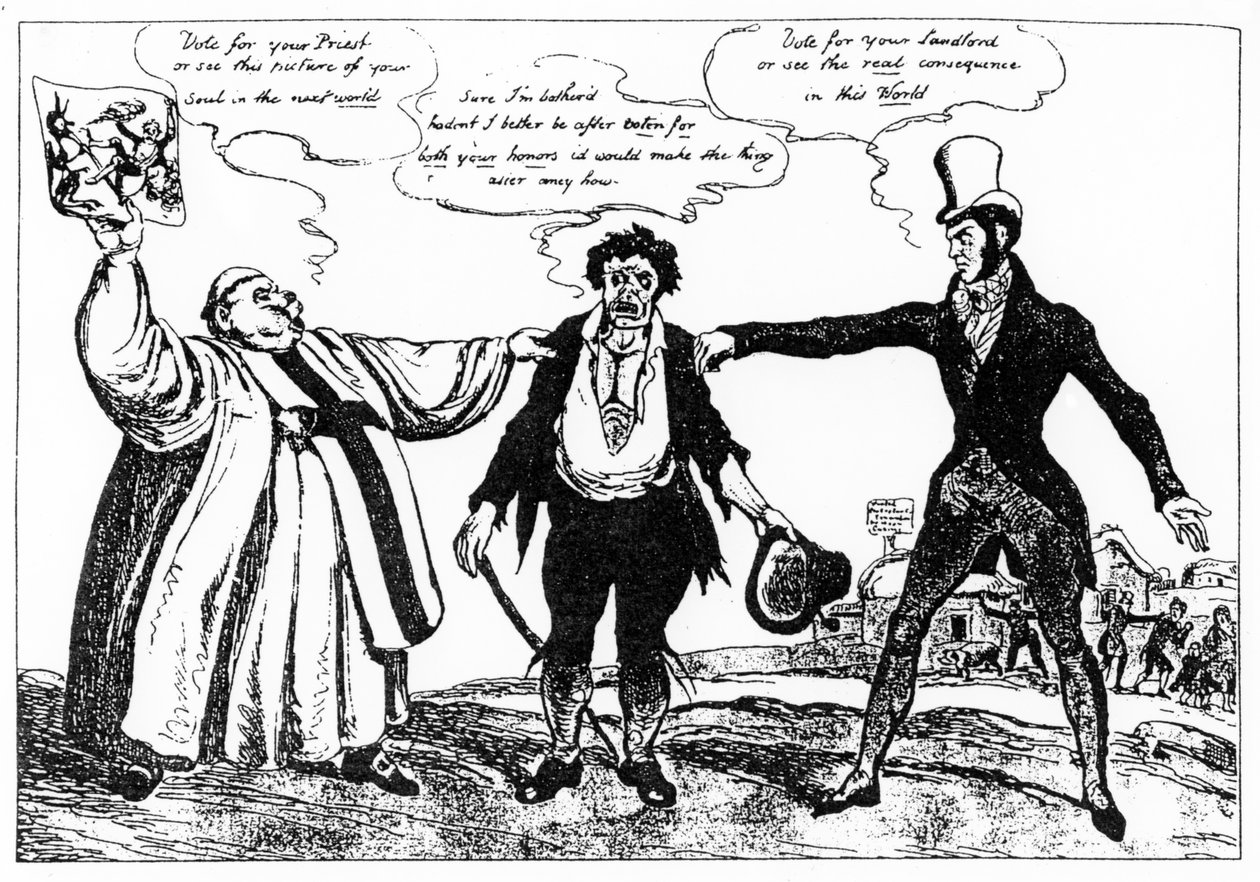
View this itemThe Waterford election of 1826 was a watershed moment in the fight for Catholic Emancipation. For one of the first times, Catholic voters, encouraged by their clergy and supported by the Catholic Association, openly defied landlord pressure and helped elect a pro-Emancipation candidate. Writing amid rumours of disorder, this correspondent to Thomas Wyse insists that a supposed 'riot' at Kilmacthomas was trivial. His defence reflects how closely such elections were scrutinised. Waterford proved that organised tenants could use the vote, rather than violence, to challenge entrenched Protestant political dominance
View this itemMajor Carter’s official report describes the same election in Waterford very differently: green ribbons, jeering crowds, and attacks on local elites. To Dublin Castle, popular celebration looked like intimidation and social breakdown. Yet historically Waterford marked a turning point, showing that Catholic political solidarity could overcome deference to landlords. This clash of perspectives (empowerment for voters, disorder for officials) captures how unsettling mass politics appeared to the old Protestant establishment.
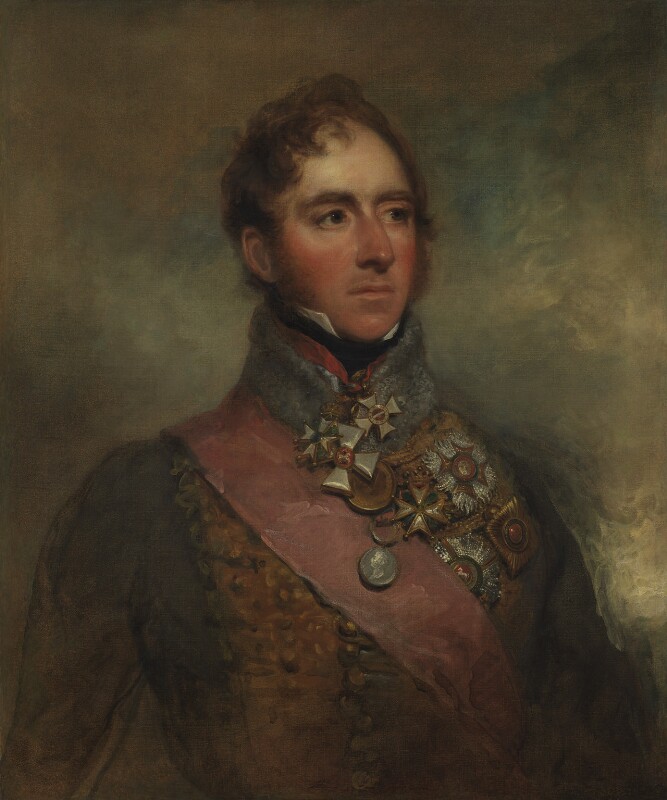
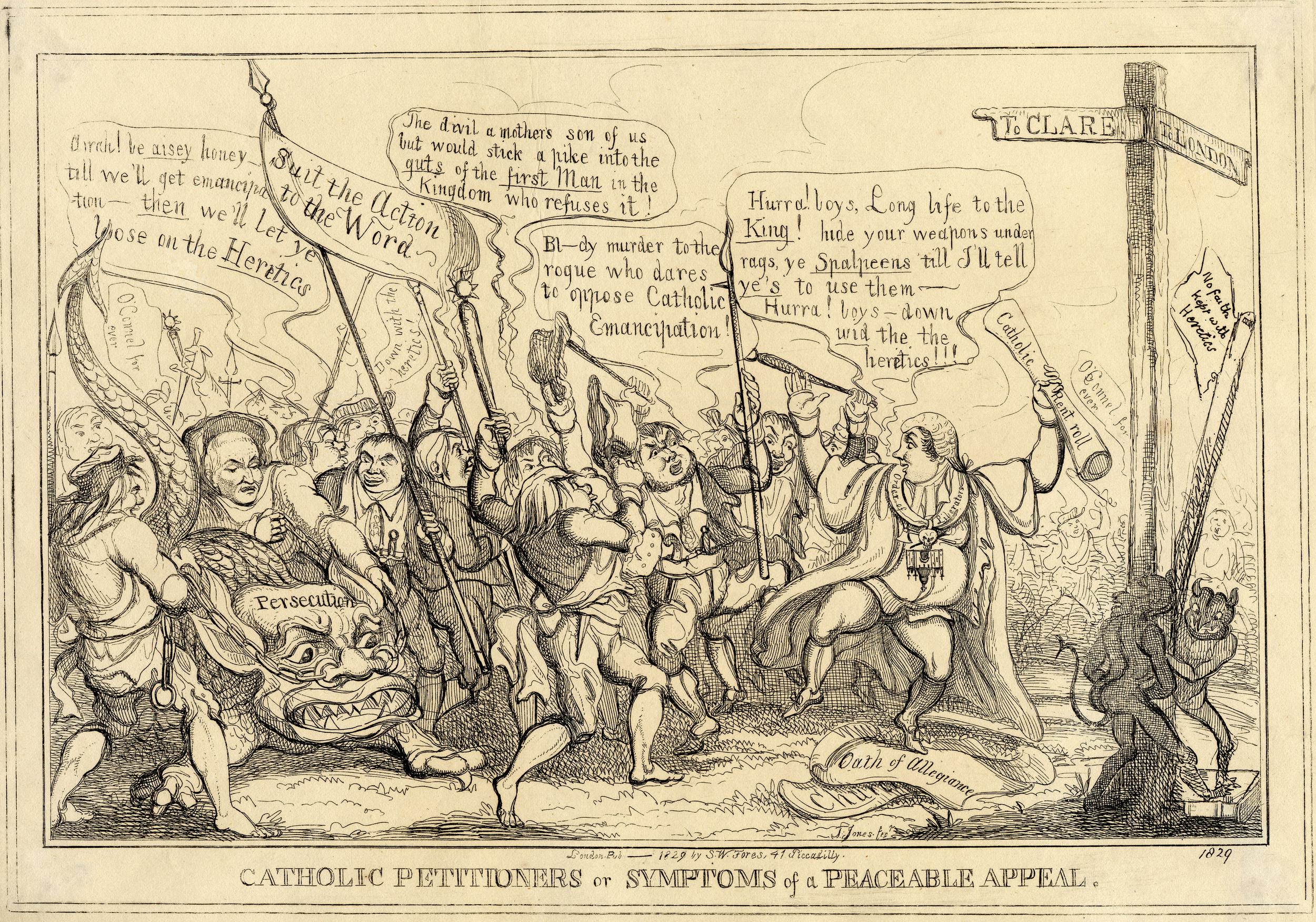
View this itemIn this letter, Major George Warburton recounts the famous Clare election of 1828, when O’Connell stood for Parliament despite being legally barred as a Catholic. Priests canvassed voters, vast crowds gathered, and landlords’ influence collapsed. O’Connell’s victory created a constitutional crisis: either exclude an elected member of parliament or change the law. It was this election that forced the Prime Minister, the Duke of Wellington and his colleagues to concede Emancipation to avoid unrest.
View this itemThis private letter was written to Lord Anglesey, the Lord Lieutenant of Ireland, at a moment when government policy was shifting. Anglesey, initially cautious about Catholic claims, had become convinced after the Clare election that continued resistance was dangerous and unsustainable. From Dublin he pressed ministers in London to accept Emancipation as a necessity. The correspondence reflects that changing mood: opposition, it admits, has been 'protracted too far'. Reform now appeared less a matter of principle than of political survival and stability.
View this itemCharles Chetwynd-Talbot, 2nd Earl Talbot, a former Lord Lieutenant of Ireland, writes in disbelief as ministers move toward Emancipation. Unlike the sitting Lord Lieutenant, Anglesey, who had come to regard concession as unavoidable after Clare, Talbot remained firmly opposed. He laments the abandonment of Protestant safeguards and conveys a near-apocalyptic anxiety about the consequences. His letter captures the shock and sense of betrayal felt by many conservative elites, for whom reform seemed not a prudent adjustment but a surrender of the Protestant constitution itself.
View this itemEven after the Catholic Relief Act passed, the state remained wary. In 1829 Daniel O’Connell, though victorious at Clare the previous year, was required to seek re-election because the new Act altered the parliamentary oath and effectively vacated his seat. During this renewed contest, the Chief Constable John Wright reported priest-led speeches, armed gatherings, and intimidation. His alarm suggests that authorities still equated popular Catholic politics with disorder. Emancipation granted legal rights, but it did not dissolve suspicion. Surveillance and policing continued to shape political life.
View this itemIn this triumphant letter, Daniel O’Connell calls the Emancipation Bill a 'bloodless revolution'. Yet he also warns supporters to remain organised and protest the loss of the forty-shilling freeholders. These were small Catholic tenants who qualified to vote because they held land worth forty shillings a year, and whose ballots had powered victories in Waterford and Clare. The 1829 Act raised the property qualification to £10, effectively disenfranchising them and shrinking the electorate. O’Connell’s words capture both achievement and cost: Emancipation was won through disciplined mass politics, but at the price of narrowing democratic participation.
View this item